# My Mother-in-Law Slapped Me Hours After I Gave Birth—Then My Parents Walked Into the Room
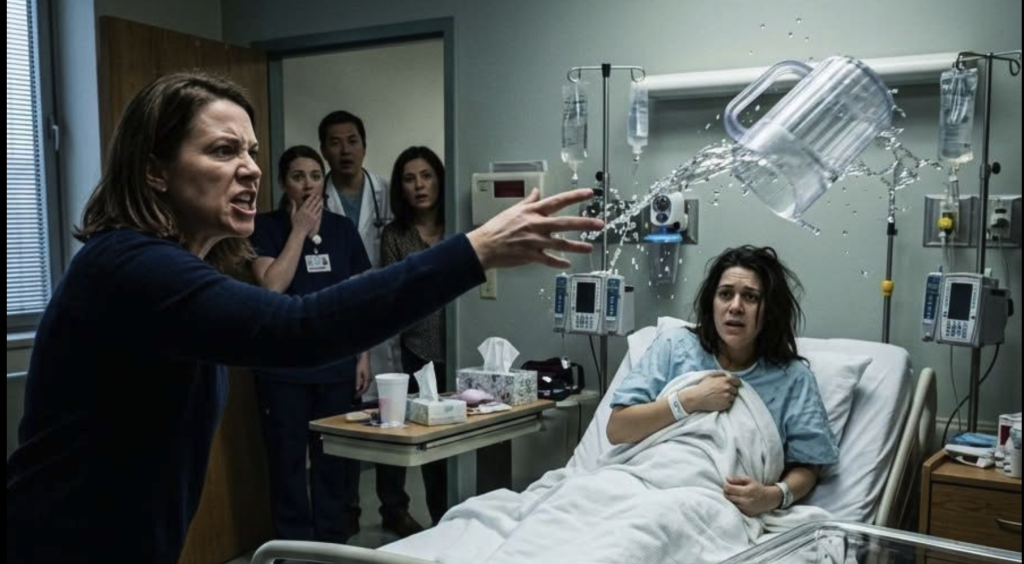
My father stepped into the hospital room and stopped just short of the broken glass.
For a moment, nobody spoke.
My daughter cried against my chest. Water spread beneath the bassinet, soaking the corner of my discharge folder. My cheek burned where Beatrice had struck me.
Mark kept tapping his phone.
My father looked at him, then at my mother-in-law.
“Step away from my daughter.”
Beatrice straightened.
“This is a family matter.”
My mother moved past her and pressed the nurse call button.
“Yes,” she said. “It is.”
## The Room I Had Paid For
Less than an hour earlier, I had believed the hardest part of the night was over.
After twenty hours of labor, my daughter had arrived at 2:17 a.m. She lay wrapped in a pink-and-white blanket, making tiny sounds against my chest.
I was exhausted. My hair clung to my neck, and lifting a cup of water felt like work.
But she was here.
I had booked the private maternity room months earlier and paid for it from my savings. I wanted privacy during recovery and enough space for someone to stay beside me.
I had imagined that person would be Mark.
Instead, he sat in the visitor chair, absorbed in a game. He hadn’t held our daughter. When I whispered, “Your daughter is here,” he said, “One second.”
That second never ended.
Then his mother arrived.
Beatrice inspected the wider bed, the couch, and the private bathroom before she looked at me.
“So this is where my son’s money went?”
“I paid for it,” I told her. “From my savings.”
Her expression changed.
She slapped me while my baby was still in my arms.
Then she grabbed the glass from the nightstand and smashed it on the floor.
When I looked to my husband for help, he sighed.
“Move to a standard room, Chloe. Save the money so I can top up. I need the upgrade package.”
My parents reached the doorway in time to hear him.
## Someone Finally Asked What I Needed
The nurse arrived quickly.
She took in the broken glass, my crying daughter, and the mark on my face.
“What happened?”
Beatrice answered first.
“She’s upset. She just gave birth, and she’s being very emotional.”
“My mother-in-law struck me,” I said.
My voice sounded thin, but the words were clear.
The nurse turned toward me.
“Would you like these visitors removed?”
“Yes.”
Mark finally lowered his phone.
“Chloe, seriously?”
The nurse stayed beside my bed.
“Sir, you need to step outside.”
“I’m her husband.”
“And she has asked you to leave.”
Beatrice tried to speak over her. My father moved aside so the nurse could reach the door and call for assistance.
My mother sat beside me.
“May I take the baby for a minute?”
I nodded.
She lifted my daughter carefully, holding her close while another nurse checked on me.
With my arms empty, I began to shake.
Until then, I had been concentrating on keeping my baby safe in my hands. Now I could feel everything: the pain in my cheek, the exhaustion, and the fear I had pushed aside.
My mother reached for my hand.
“You don’t have to manage them anymore.”
## The Hallway
Security escorted Mark and Beatrice out of the room.
Through the doorway, I heard Beatrice complain about being treated like a criminal.
Mark asked whether he could at least get his charger.
My father returned with it, handed it to him, and closed the door.
The nurse examined my cheek and asked me to describe what had happened. She documented my account and the injury, then explained that I could speak with the police if I wanted.
I looked at my mother.
She didn’t answer for me.
For years, other people had told me how to handle Beatrice: ignore her, forgive her, keep the peace.
My mother simply waited.
“Yes,” I said. “I want to make a report.”
My father pulled a chair close to the bed.
“We’ll stay.”
It was the first time that night I believed I could sleep.
## What I Had Been Hiding
By morning, my parents knew more about my marriage than I had ever intended to tell them.
They knew I had paid most of the household bills for months.
They knew Mark repeatedly spent money on games while promising to contribute with his next paycheck.
They knew Beatrice had a key to our apartment and arrived whenever she pleased.
What they hadn’t known was how carefully I had learned to arrange my life around their reactions.
I bought groceries before paying for anything personal. I kept receipts so I could prove purchases were necessary. I softened every disagreement before bringing it to Mark.
When Beatrice criticized me, he told me she meant well.
When she opened my mail, he said she was curious.
When she demanded money, he said helping would be easier than arguing.
I had stopped telling my parents because each incident sounded small when I described it alone.
Sitting in that hospital bed, I finally told the whole story.
My father listened without interrupting.
Then he asked, “Do you want to go home with him?”
“No.”
“Then let’s work out where you do want to go.”
## A Place to Recover
I went to my parents’ house after discharge.
My old bedroom had clean sheets, a bassinet, and a chair beside the window. My mother put water and snacks within reach.
There were no speeches about what I should have done sooner.
When my daughter woke, someone helped. When I needed rest, someone took a turn. When I cried, nobody accused me of making trouble.
Mark sent messages throughout the first day.
**You embarrassed Mom.**
Then:
**You can’t keep my daughter from me.**
Later:
**Are you still paying your half of the bills?**
I saved them.
With my parents’ help, I arranged a consultation with a family lawyer. We discussed the hospital incident, my finances, and how to handle communication and parenting arrangements.
I followed the advice I received rather than arguing with Mark by text.
I changed passwords to my personal accounts, reviewed access to my savings, and gathered financial records.
For the first time in months, I knew where my money was going.
## The Apology With a Condition
Four days later, Mark asked to talk.
We spoke by phone while my father watched the baby in the next room.
“Mom shouldn’t have slapped you,” he said.
I waited.
“But you know how she gets when she thinks someone is taking advantage of me.”
There it was.
“What did I do that took advantage of you?”
“You didn’t need that room.”
“I paid for it.”
“We’re married. It’s our money.”
“Then why did you ask me to save it for your game?”
He went quiet.
I could hear him moving around, searching for an answer.
“I was stressed.”
“So was I. I had just given birth.”
“You’re making me sound terrible.”
“I’m describing what happened.”
He asked whether we could forget the hospital argument and start over.
I looked toward the bedroom, where my father was softly talking to my daughter.
“No,” I said. “We need to deal with what happened.”
## Returning for My Things
A week later, arrangements were made for me to collect essentials from the apartment.
My daughter stayed with my mother.
My father came with me.
The nursery I had prepared was untouched. A stack of washed baby clothes sat beside the changing mat. On the kitchen counter were dishes I had left before going into labor.
Mark stood in the hallway.
“So you’re really doing this?”
“I’m taking what I need.”
Beatrice appeared behind him. Somehow, even now, she believed she belonged in the middle of our marriage.
“You’ve turned one mistake into a disaster,” she said.
I folded a small sleepsuit and placed it in my bag.
“You hit me while I was holding my newborn.”
“I lost my temper.”
“Yes.”
That was all I said.
I didn’t need to persuade her that it mattered.
My father carried the bags to the car. I took my documents, clothes, and the baby supplies I had bought.
When we left, I handed Mark my key.
## What Changed
The weeks that followed were difficult.
There were legal appointments, practical decisions, and nights when grief arrived after the baby finally fell asleep.
I missed the marriage I had expected to have. I wondered how long I had been waiting for Mark to become the person I needed.
But ordinary things began to feel different.
I could buy something for my daughter without preparing a defense.
I could rest without listening for Beatrice’s arrival.
I could ask for help and receive it without being told I owed someone afterward.
My parents hadn’t stormed into the room and solved my life.
They had witnessed what happened, believed me, and stayed while I made decisions.
That support gave me room to act.
One afternoon, my father held my daughter near the window while my mother brought me tea.
The baby opened her hand around his finger.
I remembered the hospital: the shattered glass, Mark’s glowing screen, and my own desperate effort to stay still.
Then I looked around the quiet room.
My daughter was safe in someone’s arms.
So was I.