My Father Called Me an Embarrassment—Minutes Before Hearing My Name on Television
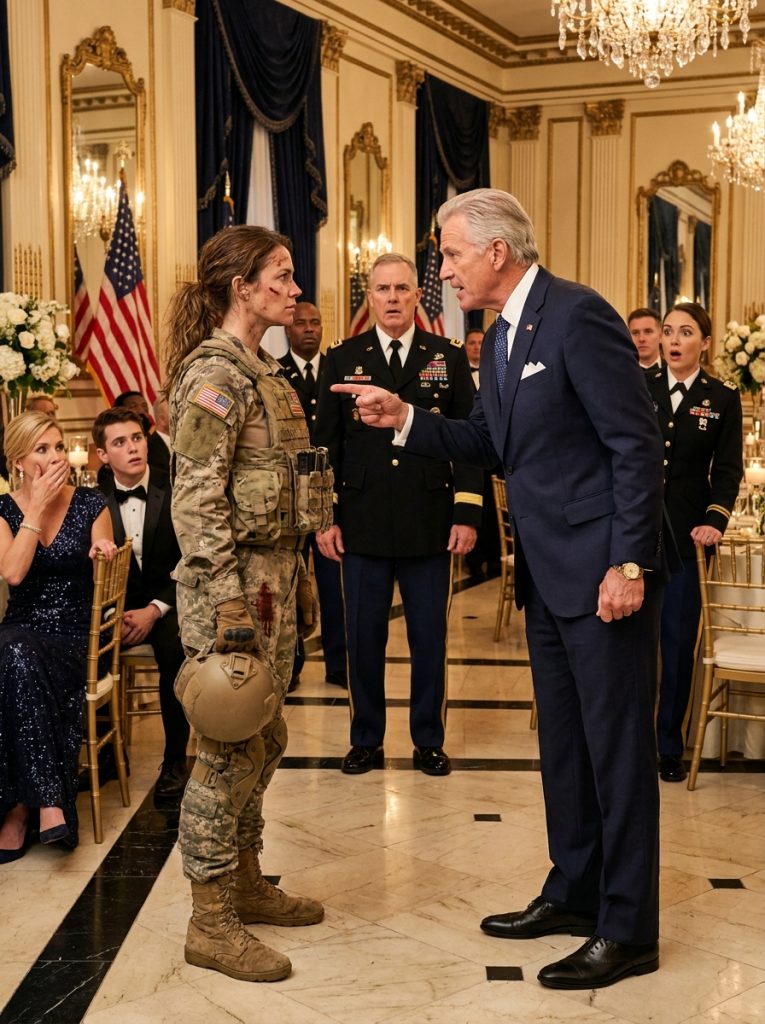
An original fictional story.
“No, Dad.”
His hand stopped in the air.
“You don’t have to make a speech,” he said. “Just tell everyone a little about what happened.”
“I’m not discussing the mission.”
“Of course. Whatever you’re allowed to say.”
Around us, his guests waited.
The invitation sounded warmer than everything he had said when I arrived.
But I was wearing the same uniform.
The same muddy boots.
Nothing about me had changed during those few minutes.
Leaving the Table
Amanda stood.
“Evelyn needs food and rest. I’m taking her home.”
Dad frowned.
“We haven’t even served dinner.”
“She isn’t staying.”
I looked at my sister.
She hadn’t asked what I wanted, but she had understood what I could no longer manage.
“I’d appreciate a ride.”
Admiral Ellis moved aside as I stood.
“If your command permits it, I’d like to send a note recognizing the team.”
“Thank you, sir. Through the unit would be best.”
He nodded.
My father watched the exchange.
I could almost see him revising the evening into a story he would tell later.
I couldn’t stop him.
I could leave before being required to perform in it.
The Quiet Car
Amanda drove without asking about the mission.
At a red light, she glanced toward my shoulder.
“How much pain are you in?”
“Enough.”
“Did they give you instructions?”
“Yes.”
“Then we’re following them.”
We collected my belongings from the base arrangements and went to her house.
She found clean clothes, warmed soup, and left my phone charging beside the bed.
Nobody asked me to be impressive.
When I finally lay down, my hands began shaking.
Amanda sat nearby until they stopped.
What the Broadcast Couldn’t Show
Public recognition compresses complicated events.
A few sentences.
A photograph.
Words such as courage and professionalism.
It couldn’t show how frightened we had been.
Or the arguments over difficult choices.
Or how many people contributed without appearing in the picture.
I remembered Sergeant Marcus Green checking a route before signaling us forward.
A medic working while exhausted.
A teammate taking weight from my injured shoulder without making a comment.
The rescue succeeded because people noticed what others needed and responded.
That was what stayed with me.
Not hearing my name.
The Morning Messages
By morning, Dad had called four times.
Daniel sent a photograph of the television screen.
Had no idea. Proud of you.
I stared at the message.
There had been years in which he could have asked about my work.
He didn’t need confidential details to know whether I was tired, happy, or struggling.
I answered later.
Thank you. I need some rest.
Dad’s first message concerned the admiral.
Patrick would like to connect again. We should arrange dinner when you’re recovered.
His second asked whether the photograph could be shared.
Only the third asked how I felt.
I put down the phone.
Amanda brought coffee and said nothing when she saw my expression.
A Different Conversation
Three days later, I agreed to meet Dad privately.
No guests.
No television.
We sat in his kitchen.
He began with the broadcast.
“I didn’t realize the level of work you were doing.”
“You knew I served.”
“Not like that.”
“What would have made my appearance acceptable if my name hadn’t been mentioned?”
He looked at me.
“I wasn’t saying your service—”
“You called me an embarrassment.”
He rubbed a hand across his forehead.
“I was surprised. Everyone was there.”
“So was I.”
The words settled between us.
For once, he didn’t interrupt.
What I Had Wanted
I told him I hadn’t needed a speech or a celebration.
He could have offered a chair.
Asked whether I had eaten.
Believed me when I said I had come straight from work.
Instead, he compared me with an imagined woman whose life looked more appropriate at his table.
“I’m not asking you to understand every choice I’ve made,” I said. “But you don’t get to humiliate me because you would have chosen differently.”
His eyes moved toward the window.
Then he said, “You’re right.”
I waited.
“I was cruel.”
It was the first useful thing he had said about that evening.
An Apology Without an Audience
Dad wanted to telephone his guests.
I told him he could correct what he had said if he wished.
But I didn’t want another gathering arranged around my forgiveness.
“I need this to be different when nobody important is watching.”
He nodded slowly.
Repair would take more than one conversation.
I told him I would leave future visits if he insulted my career, appearance, or personal life.
He didn’t like hearing that.
He accepted it anyway.
The Family Who Called First
Over the following weeks, my teammates checked on one another.
Some conversations involved practical things.
Appointments.
Equipment.
The return to routine.
Others began with a question that took longer to answer.
“How are you sleeping?”
I used the support available to me.
Experience had taught me that functioning through an emergency and recovering afterward were different tasks.
Amanda kept inviting me for ordinary dinners.
She asked whether I wanted company.
Sometimes I did.
Sometimes I wanted quiet.
She accepted both answers.
What Changed
Dad did contact the guests from his birthday dinner.
He told them his comments had been unacceptable.
Later, he asked whether I would visit on a Sunday afternoon.
I hesitated.
Then I agreed.
When I arrived, I wore jeans and an old sweatshirt.
He opened the door.
For a moment, we simply looked at each other.
Then he stepped aside.
“Have you eaten?”
“Not yet.”
“There’s soup.”
Inside, the television was off.
No guests were waiting.
He had put two bowls on the kitchen table.
I sat down.
It wasn’t everything.
My Father Called Me an Embarrassment—Minutes Before Hearing My Name on Television
Advertisement