The petty officer held the envelope between us.
“I made copies,” he said.
I looked toward the security personnel escorting Brock away.
“What’s your name?”
“Petty Officer Nathan Cole.”
“Cole, I’m going to make sure you can speak with someone handling this independently.”
His grip loosened slightly.
I had become a victim and witness that morning. I could no longer pretend I was simply the officer reviewing an exercise.
Whatever Nathan had brought deserved a process that didn’t depend on my anger.
Inside the Envelope
Nathan’s documents concerned a training incident several weeks earlier.
An equipment problem had injured a sailor.
The official summary described a minor interruption followed by a routine medical check.
Nathan’s account was different.
He said concerns had been raised beforehand. He also said personnel were pressured to describe the incident in language that minimized what happened.
He had kept messages and copies of reports he was authorized to possess.
The other sailors had their own accounts.
I didn’t interview them on the parade ground.
Their information went to the officials assigned to receive it.
Then I went for medical care.
The Appointment Brock Misunderstood
My role had been broader than checking whether the exercise ran on time.
I was part of a team assessing readiness, coordination, and whether reported procedures matched what personnel were actually doing.
The admiral knew my work from an earlier assignment.
He had selected me because I asked careful questions and followed the answers.
My operational background contributed to that experience.
It didn’t make my questions more legitimate than another officer’s, and it didn’t turn me into someone above ordinary procedures.
Brock had decided otherwise.
He treated administrative scrutiny as an insult from someone he considered beneath him.
When I refused to withdraw the request, he made it personal.
Giving My Statement
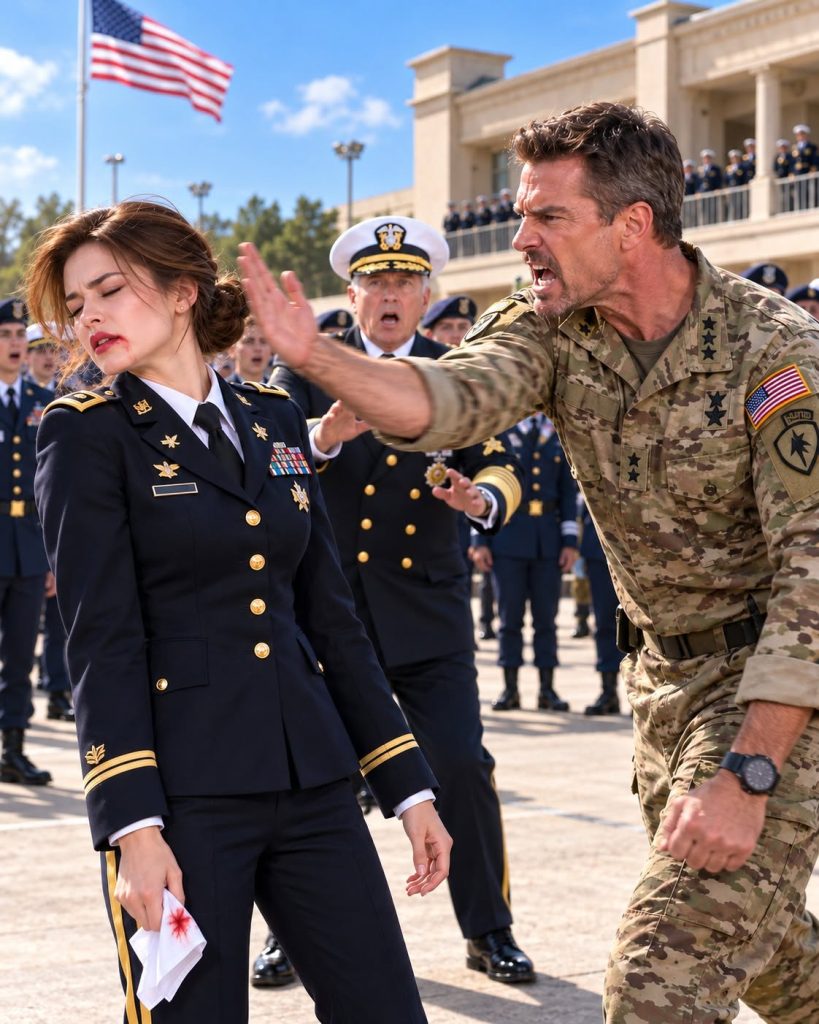
After my injuries were documented, I gave a detailed account.
Where Brock approached.
What he said.
The first strike.
His attempted second strike.
My actions to stop it.
There were recordings and many witnesses, but I still needed to describe my own recollection accurately.
I didn’t speculate about what Brock felt.
I didn’t include stories from past assignments to establish how dangerous I could be.
Those things weren’t evidence of what happened that morning.
The investigators asked questions.
I answered them.
Then I went back to my quarters and discovered that holding myself together through the process had left me exhausted.
Reed’s Visit
Reed stopped by that evening.
He brought food and asked whether I wanted company.
For a while, we talked about nothing important.
Eventually, he said, “I should have reached you faster.”
“It happened quickly.”
“I still saw it.”
“So did everyone else.”
He looked at the floor.
The silence on the parade ground had stayed with both of us.
“I’m glad those sailors came forward,” I said.
Reed nodded.
“They’d been waiting for someone to take them seriously.”
That concerned me more than my bruised face.
What the Review Found
Over the following weeks, independent investigators examined the training reports, communications, witness accounts, and the assault.
The issues were related, but they weren’t treated as one simple accusation.
Some discrepancies had ordinary explanations.
Others did not.
Evidence supported that an injury had been minimized in reporting and that personnel had faced pressure about how they described safety concerns.
The sailor injured during the earlier incident provided an account of his own.
He hadn’t wanted to become the center of a dispute.
He wanted the record to reflect what happened to him.
I understood that distinction.
The Story Brock Tried to Tell
Brock initially described our confrontation as an officer losing control after being corrected.
The recordings did not support that account.
Witnesses described him approaching me, striking me, and demanding an apology.
His assertion that I had no relevant experience also became difficult to maintain.
But my service history wasn’t what disproved his version of the assault.
The evidence did.
He was entitled to respond through the process.
He was not entitled to have his first explanation accepted simply because he delivered it confidently.
The Proceedings
The case took months.
I continued working under adjusted arrangements while other personnel handled matters connected to my complaint.
When required, I gave evidence.
Nathan did, too.
Brock was ultimately found guilty at court-martial of offenses arising from the assault. Separate findings concerning his conduct as a commander were addressed through the appropriate proceedings.
He did not return to lead the exercise.
There was no celebration in formation.
People returned to work, carrying the consequences of what had happened.
For some, that included learning to trust reporting channels again.
Speaking Without Being Certain
Before leaving Coronado, I met Nathan in a corridor.
He looked uncomfortable.
“Captain, I wanted to thank you.”
“You brought the information forward.”
“I almost didn’t.”
“I know.”
He glanced toward the office behind him.
“I kept thinking I needed to be certain about every detail before saying anything.”
“You needed to be honest about what you knew.”
He nodded.
That was what I hoped would stay with him.
Questions could be examined.
Uncertainty could be stated.
Neither required silence.
The Next Formation
Months later, I attended another exercise.
A junior officer approached with a clipboard while personnel prepared nearby.
She hesitated before speaking.
“There’s a problem with the schedule.”
“What problem?”
“The equipment inspection hasn’t been completed. We can start on time, or we can finish checking.”
I asked her to show me what remained.
She did.
We delayed the start.
Nobody shouted.
Nobody questioned whether raising the concern meant she lacked courage.
She returned to her team, and I waited while they completed the work.
There was nothing dramatic about that morning.
That was what made it worth remembering.
He Struck Me in Front of the Formation—Then His Sailors Began Speaking
Advertisement