My Mother Hurt My Son—Then I Discovered What She Wanted From My Company
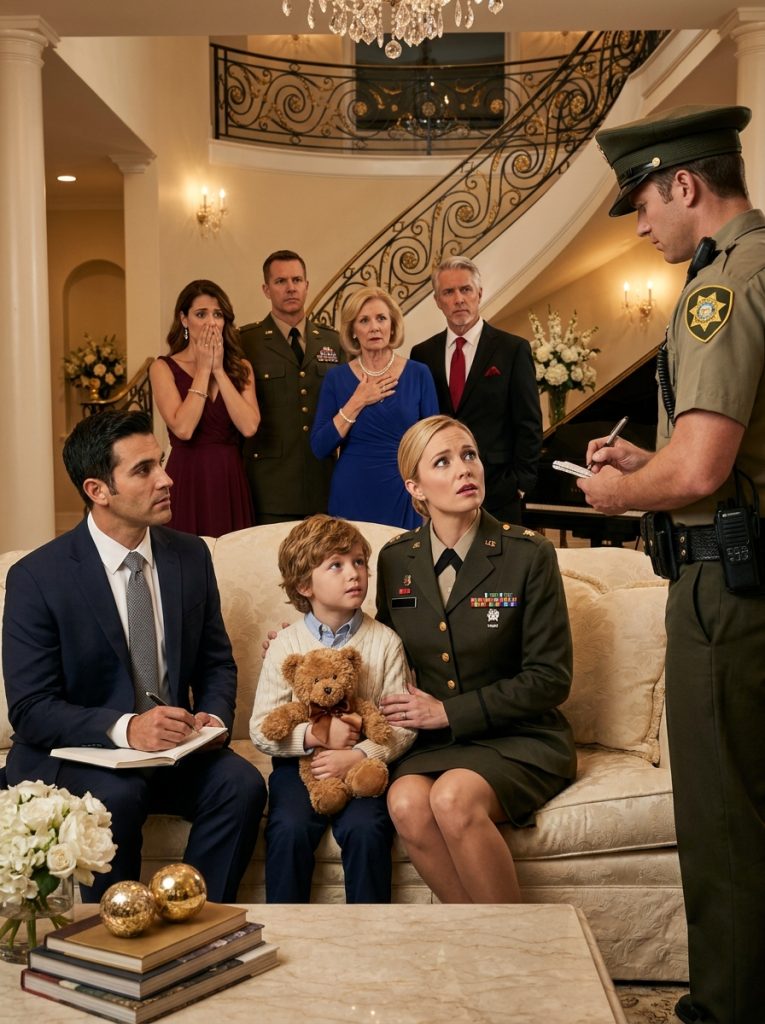
An original fictional story.
I read the email again.
Eleven days.
For eleven days, my parents had known that the business they dismissed as office work had become something valuable.
They hadn’t called to congratulate me.
They hadn’t asked about the years it took.
Instead, they prepared an investment proposal and claimed I supported it.
Then, at Sunday dinner, my mother struck my child.
I closed the laptop.
Matthew had called from his bedroom.
For that moment, nothing in the application needed me more than he did.
What He Needed to Hear
I sat beside him while he held the blanket beneath his chin.
“Will Grandma be angry because we left?”
“That’s for Grandma to manage.”
“Do I have to go back?”
“No.”
He watched me closely.
I had promised him ordinary things before: a trip to the park, pancakes, another bedtime story.
This promise felt different.
I needed him to believe it.
“You won’t be going there. And she won’t be coming here.”
His shoulders lowered slightly.
Then he asked where his car was.
I had forgotten it beneath the dining table.
“I’ll arrange to get it back.”
He nodded.
Only then did he close his eyes.
The Decision I Shouldn’t Have Needed Wealth to Make
After Julian died, I started my company with an old laptop and work completed around Matthew’s sleep.
It grew.
Eventually, an independent financing round valued it in the billions. That valuation wasn’t cash sitting in my personal account, but my ownership provided considerable security.
I rarely discussed it with my relatives.
At first, I wanted to avoid questions while the business was uncertain.
Later, privacy became habit.
None of that should have mattered to how they treated Matthew.
I could have been struggling exactly as they imagined.
He would still have deserved protection.
The Report
The following morning, my attorney helped me understand the available protective steps.
I reported what happened and supplied the information I had.
The hospital had documented Matthew’s injury.
There were witnesses at dinner.
I preserved messages from relatives describing the incident as “one slap” and telling me to stop exaggerating.
Those messages didn’t excuse what happened. They acknowledged it.
Matthew received follow-up care, and I arranged support to help him talk through the experience without being repeatedly questioned at home.
My role was to listen and keep him safe.
Professionals handled the investigation.
What My Parents Wanted
Their proposal requested backing for a property development my father couldn’t finance alone.
It described me as a supportive family member whose company would participate.
There was no written commitment from me.
No company approval.
No proper basis for presenting us as a partner.
The photograph of Matthew appeared in a section about “building a family legacy.”
I looked at those words for a long time.
Then I asked Rebecca to correct the claim, require removal of the photograph, and make clear that no endorsement existed.
Business decisions would follow normal review procedures.
There would be no special funding meeting because my mother requested one.
The Conversation
I agreed to a video call with my parents, with my attorney present.
Matthew was elsewhere with my friend.
My mother began with the company.
“We were so pleased when we found out.”
“Then why didn’t you tell me?”
“We wanted to surprise you with an opportunity.”
I looked at the application.
“You claimed I had already agreed.”
Dad interrupted.
“It was an introduction. Nothing binding.”
“It was inaccurate.”
Mom sighed.
“Must everything become a legal matter?”
I let the question pass.
Then I asked about Matthew.
Her Explanation
“He reached toward Dylan,” she said.
“For his own toy.”
“He needs to learn respect.”
I waited for something else.
Regret.
Concern.
A question about the injury.
Instead, she said I had embarrassed her by leaving.
Dad tried to soften it.
“Your mother lost her temper.”
“Yes,” I said. “And Matthew was hurt.”
“Surely we can move past one incident.”
“I won’t discuss reconciliation while you’re minimizing it.”
Mom leaned toward the camera.
“So you’ll destroy this family over a toy?”
“No. I’m responding to what you did to my son.”
I ended the call after explaining the contact boundaries my attorney and I had put in place.
The Car Comes Home
Two days later, Dad arranged to return the red car.
It arrived with a note saying he regretted not intervening.
I read it before giving Matthew the toy.
He turned it over in his hands.
Then he parked it beside the photograph of Julian in his room.
That evening, I asked whether he wanted to play.
He nodded.
We made a road from books and cushions.
He corrected my engine noises.
“Daddy did it deeper.”
“Like this?”
He laughed.
I kept going until he laughed again.
What Followed
The investigation and legal proceedings took time.
My mother eventually pleaded guilty to an assault offense arising from the incident. Contact restrictions remained in place.
Valerie sent messages defending her.
I stopped answering those.
Dad’s apology became more specific later. He acknowledged seeing what happened and choosing not to act.
I appreciated the honesty without immediately restoring visits.
Matthew’s sense of safety wouldn’t be used to demonstrate that I had forgiven someone.
My company declined the proposed investment.
The decision was communicated professionally, without threats or publicity.
Asking Before Taking
Months later, a friend brought her daughter over.
She noticed the red car.
“Can I play with it?”
Matthew looked at me.
I waited.
“After I finish,” he said.
“Okay.”
She chose another toy.
Nothing broke.
Nobody shouted.
Later, Matthew handed her the car himself and showed her the road we had made.
I watched from the kitchen doorway.
He was learning something I should have taught him sooner: he could set a limit and remain safe in the room.
This time, I was making sure that was true.
My Mother Hurt My Son—Then I Discovered What She Wanted From My Company
Advertisement