# My Mother-in-Law Told Me to Handle Our Baby’s Emergency Alone—So I Finally Asked for Help
At two in the morning, my husband stood in an emergency room holding the coat his mother had brought him.
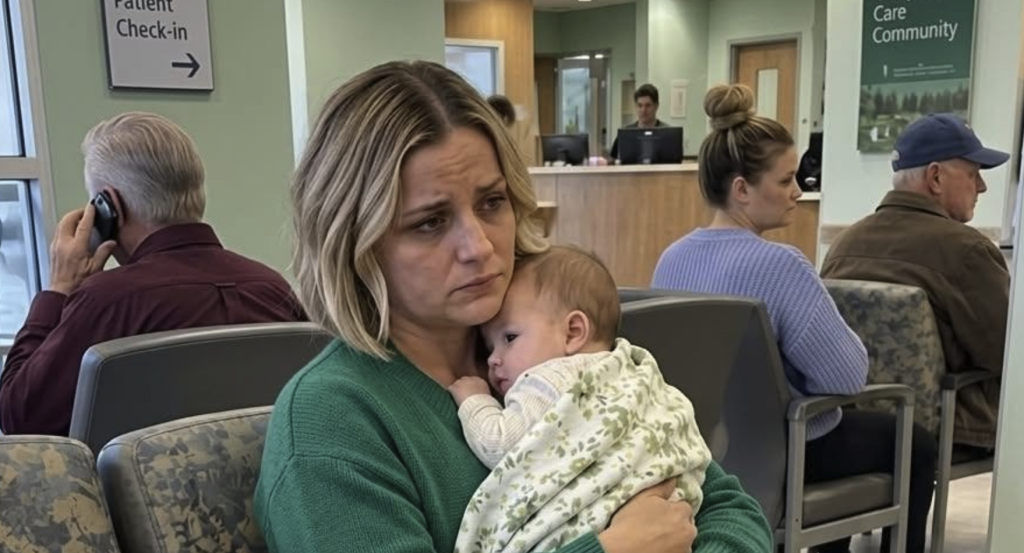
Our four-month-old daughter was burning with fever in my arms.
His mother pointed at me.
“He never agreed to this kind of stress. You’re the mother. You deal with it.”
I looked at Ethan, waiting for him to say something.
He studied the floor.
So I reached into my bag, took out my phone, and made a call.
For once, I wasn’t calling someone who would tell me to be patient with him.
## The Night Everything Became Clear
The night had started with a fever.
Our daughter, Lily, had been restless for hours. When her temperature reached 104 degrees, I called her pediatrician again.
“Take her to the emergency room now,” she told me.
I packed the diaper bag while Ethan searched for his keys.
On the drive, I sat in the back beside Lily’s car seat. At every red light, I leaned close enough to watch her chest rise and fall.
At the hospital, Ethan initially helped. He carried the bag, gave our information at reception, and found two chairs together.
Then the waiting began.
He checked his watch.
He rubbed his face.
Finally, he muttered, “This is ridiculous.”
“What is?”
“I have one of the most important presentations of my career at nine.”
I looked at him.
“Our daughter has a 104-degree fever.”
“I know. But we’ve been here forever.”
“We’re waiting for a doctor.”
“I can’t spend the whole night here.”
I adjusted Lily against my shoulder.
“I don’t think either of us gets to choose that tonight.”
A few minutes later, Ethan walked away with his phone.
I thought he was calling his boss.
Instead, he called his mother.
## Sylvia Arrives
Sylvia drove almost forty minutes to reach the hospital.
She didn’t ask how Lily was doing.
She went straight to Ethan, picked up his coat, and pushed it into his hands.
“Come on. You can sleep at my place before work.”
“Sylvia,” I said, “your granddaughter is sick.”
“And my son is exhausted.”
“So am I.”
“That’s different. You’re the mother.”
“And he’s her father.”
Her mouth tightened.
“He has responsibilities.”
I looked down at the little girl in my arms.
“So do I.”
Sylvia raised her voice.
“He shouldn’t have to sit here because you’re panicking.”
“Her pediatrician told us to come.”
Then came the words that made several people nearby turn toward us.
“He didn’t sign up for this much pressure. You’re the mother. Handle it.”
I waited for Ethan to tell her to stop.
He stood silently, his coat folded over his arm.
I had spent months explaining that silence to myself.
He was tired. His job was demanding. He didn’t like conflict. His mother had always been difficult.
Meanwhile, I did the night feeds, arranged appointments, tracked supplies, and remembered which clothes Lily had outgrown.
I had returned to work, too.
Somehow, my exhaustion remained something I was expected to organize around.
## The Number in My Phone
At a postpartum appointment, I had admitted to a nurse that I was struggling.
She asked about support at home.
I began with my usual answer: “My husband works a lot.”
Then I cried.
Before I left, she gave me information about the hospital’s family support team, including its after-hours contact number.
“If you’re here and need help making a plan,” she said, “ask for the on-call social worker.”
I saved the number.
Now, with Sylvia glaring at me, I called it.
“My name is Rachel Donnelly,” I said. “I’m in the emergency department with my four-month-old daughter.”
The person answering asked what I needed.
“My husband is preparing to leave. I’m exhausted, and I need help figuring out support for tonight.”
Ethan moved closer.
“Rachel.”
I lifted my hand and kept listening.
I explained that Lily was waiting to be evaluated and that I was frightened of managing the rest of the night alone.
They told me someone would come speak with me.
When I ended the call, Sylvia demanded, “Who was that?”
“The hospital’s support team.”
“What did you tell them?”
“What’s happening.”
## Someone Who Knew Us
A short time later, a woman in a hospital badge approached.
Ethan recognized her first.
“Marianne?”
Marianne had led a parenting workshop we attended before Lily was born. She was a hospital social worker, and that night she was covering the emergency department.
At the workshop, Ethan had confidently described how we would share the load.
He would handle evening feeds. We would alternate getting up. He wanted me to know I could depend on him.
Marianne greeted us, then turned toward me.
“Rachel, would you like to speak somewhere quieter?”
“Yes.”
Sylvia stepped forward.
“This has been blown completely out of proportion.”
Marianne looked at her.
“I’m here to find out what support Rachel needs.”
Nobody threatened Ethan.
Nobody announced that considering leaving the hospital would automatically make him an unfit father.
Marianne simply offered me something I hadn’t had all night: a conversation centered on what Lily and I needed.
That was enough to make him put down his coat.
## Saying It Without Softening It
In a quieter corner, Marianne asked whether I wanted Ethan present.
“For now,” I said. “But not Sylvia.”
Sylvia objected. Ethan finally interrupted her.
“Mom, wait outside.”
She stared at him before walking toward the entrance.
Marianne asked me to explain the night.
I told her about the fever, the pediatrician’s instructions, and Ethan’s presentation.
Then I told her about the past four months.
I didn’t say Ethan never helped. That wasn’t true.
He held Lily when she was content. He enjoyed taking photographs of her. Sometimes he washed bottles.
But when something became difficult, he looked for me.
If she cried during his turn, he handed her back.
If he had slept badly, I took the next night.
If I asked for more help, his mother reminded me that his career supported our future.
“My career does, too,” I said.
Ethan looked toward me.
Marianne asked practical questions about rest, transport, and who could help after discharge. She explained what support the hospital could offer and what follow-up we could request.
At my request, she noted my account of the interaction.
I wanted to stop leaving every difficult conversation with the same thought: perhaps it hadn’t happened quite the way I remembered.
## Our Daughter Came First
A nurse called Lily’s name.
Marianne paused our conversation immediately.
Ethan picked up the diaper bag.
“I’ll carry that,” he said.
I let him.
The clinical team examined Lily and decided to keep her for further observation and testing.
I sat beside her while Ethan messaged his manager.
This time, he showed me the message before sending it.
**My infant daughter is receiving hospital care. I won’t be available for the morning presentation. Please arrange coverage.**
“Okay,” I said.
It was the decision he should have made earlier.
Still, I was glad he made it now.
Sylvia texted repeatedly from the waiting area.
Eventually, Ethan stepped outside and told her to go home.
When he returned, he sat beside me.
“I’m sorry.”
I watched Lily.
“For what?”
He took a breath.
“For making you ask whether I was going to stay.”
## An Apology Was Only the Beginning
By morning, Lily was more settled, though the team wanted to continue monitoring her.
I finally ate something.
Ethan held her while I used the bathroom and changed my clothes. When she fussed, he stayed with her instead of immediately looking for me.
Later, Marianne checked in.
We made a practical plan for the days ahead: time off, help from my sister, and a follow-up appointment to discuss the strain at home.
Ethan agreed to participate.
I also asked for time away from Sylvia.
When she called that afternoon, I answered once.
“You embarrassed Ethan,” she began.
“I asked for help.”
“You made him look like he doesn’t care.”
“He can explain his own choices.”
She paused.
“You can’t shut me out of my granddaughter’s life.”
“I’m deciding what visits I can manage right now. We’ll contact you when we’re ready.”
Then I ended the call.
My hands shook afterward.
Setting a boundary didn’t feel triumphant. It felt unfamiliar.
## What Happened After We Went Home
Lily eventually came home with instructions from her clinical team and follow-up arranged.
I wanted to believe one frightening night had changed everything.
But I had believed promises before.
So Ethan and I made our responsibilities specific.
He took leave.
He learned Lily’s routines without asking me to supervise every step.
We divided household tasks and planned uninterrupted rest for each of us. We also started counseling.
Some evenings went badly. We argued. He became defensive when I brought up the hospital.
Once, he said, “How long are you going to hold that against me?”
“Until I can talk about being hurt without having to comfort you,” I answered.
He sat quietly.
Then he asked me to continue.
That mattered more than another grand apology.
## The Coat on the Chair
Several weeks later, Lily woke crying while I was getting ready for bed.
Ethan reached her first.
From the hallway, I watched him lift her, check her diaper, and settle into the chair.
“You go sleep,” he told me. “I’ve got her.”
I waited a moment.
Then I went to bed.
Our marriage was still being repaired. Trust returned slowly, through ordinary things he did without an audience.
Sometimes I remembered him standing in the emergency room with his coat in his hands.
I also remembered how frightened I had been to ask someone outside our family for help.
Sylvia had told me to handle it.
I had finally done so by admitting that I needed support—and refusing to keep pretending I already had enough.