My Family Called Police After I Questioned an Inheritance Transfer—Then Their Story Began to Unravel
An original fictional story.
I didn’t leave my parents’ house in handcuffs.
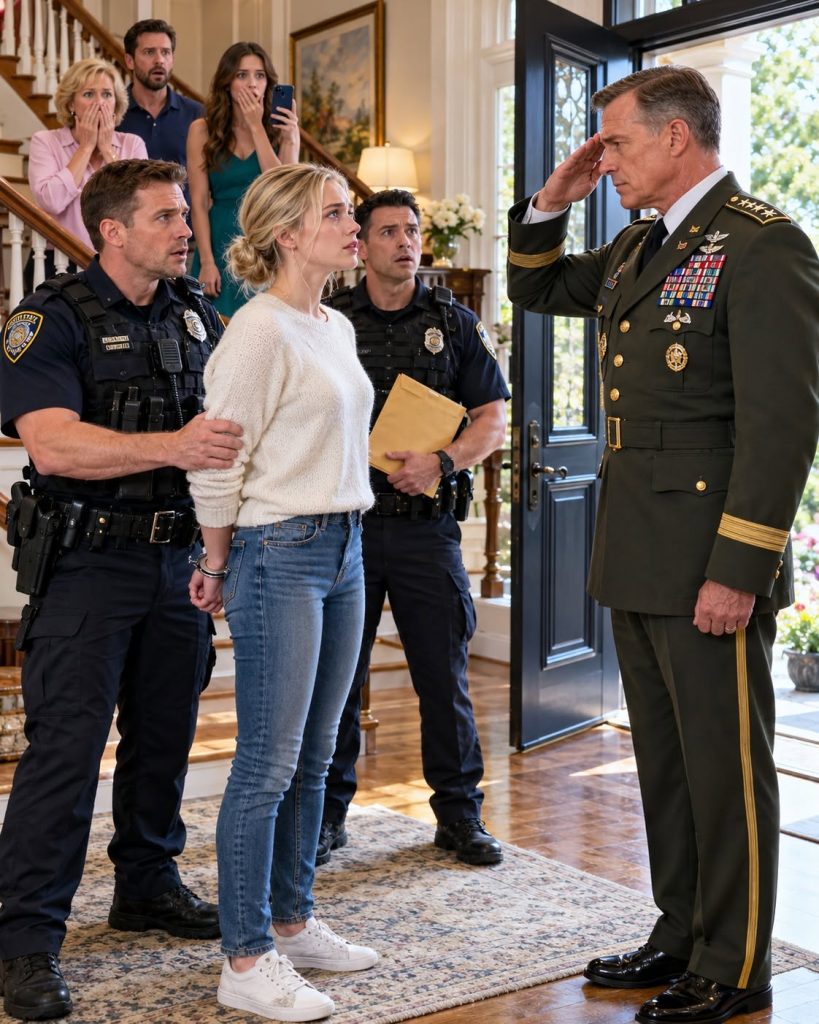
The officers separated us, gathered accounts, and examined the information available.
Tiffany’s broadcast showed me arriving as an invited guest.
It also captured parts of the confrontation after I discovered the documents.
There was no clear support for her account that I had threatened anyone.
The property dispute required further investigation.
I gave my contact details, reported the signature I disputed, and left with General Hale.
Outside, I realized my hands were shaking.
Why He Came
We had planned to meet for coffee after my family visit.
I hadn’t expected to need support.
When he received the photographs, he called. I sent a brief explanation and asked him to come to the house instead.
He arrived before I could answer his next message.
His presence unsettled my family.
But his rank didn’t settle the facts.
The invitation, recordings, documents, and witnesses mattered.
He had helped me remain steady enough to use them.
Grandma’s Property
My grandmother owned a small cottage outside Golden.
It wasn’t an estate with gates and fountains.
There were uneven shelves in the kitchen, a porch that needed painting, and a room she called her library despite owning only enough books to fill one wall.
I spent summers there as a child.
Before my first deployment, she told me she wanted me to have it.
“When you need somewhere quiet, it’ll be waiting.”
After she died, Dad handled much of the communication with the estate.
He told me there were delays.
Then repairs.
Then paperwork.
I trusted him because I was grieving and far away.
Now I wondered how often distance had been used as an opportunity.
The Attorney’s Questions
The following morning, I contacted independent counsel and the attorney handling Grandma’s estate.
I sent the photographs.
They asked whether I had signed a release giving up my interest.
“No.”
Had I authorized anyone to sign for me?
“No.”
Had I agreed that Tiffany should receive the cottage instead?
“No.”
The disputed transfer was flagged before it could proceed, and the relevant records were preserved.
I requested a complete account of what had been submitted in my name.
For the first time, information came to me directly.
Not through Dad.
What Had Been Submitted
The release purported to show that I voluntarily stepped aside so Tiffany could receive the property.
Supporting paperwork suggested that I considered maintaining the cottage impractical because of my military commitments.
It sounded almost reasonable.
That was what made it dangerous.
Dad knew enough about my circumstances to invent an explanation someone else might accept.
But I hadn’t made that decision.
The notarial acknowledgment also required examination. The person whose details appeared on it did not confirm witnessing me sign.
My attorney advised me to let investigators establish what happened.
I followed that advice.
My Sister’s Version
Tiffany called three days later.
“I didn’t know Dad had done anything wrong.”
“Did you believe I agreed to give you the cottage?”
“He said you didn’t want it.”
“Then why didn’t you ask me?”
She went quiet.
I thought about the emergency number she had never used and the messages she answered only when convenient.
“I thought you’d be difficult.”
I sat back.
“So you avoided asking because you might hear no.”
“That’s not what I meant.”
It was close enough that neither of us knew what to say next.
Then she apologized for calling police.
I told her the report was something she would need to address honestly with them.
What My Career Didn’t Prove
Dad left a voicemail asking why I hadn’t explained my relationship with General Hale.
He wanted to know whether I had worked on important assignments.
I listened once.
Then I deleted the message after preserving what needed keeping.
My service record wasn’t the reason my signature mattered.
I could have spent five years doing exactly the modest work my family imagined.
They still wouldn’t have been entitled to take what Grandma left me.
I stopped offering accomplishments as evidence that I deserved ordinary honesty.
The Outcome
The estate proceedings took time.
So did the investigation into the documents.
Dad eventually admitted arranging for a release to be submitted without my authorization. His case ended in a guilty plea connected with the fraudulent paperwork.
The allegation Tiffany made against me was separately reviewed.
I cooperated when asked and did not try to control every outcome.
The cottage was ultimately distributed according to Grandma’s valid estate documents.
There was no victory party.
I received keys, records, and responsibility for a roof that would need attention sooner than I liked.
It was mine to handle.
Returning Alone
The first afternoon I visited, the rooms smelled of dust and old wood.
I opened the windows.
A neighbor came over with a box she had kept after helping Grandma organize some belongings.
Inside were photographs, letters, and a small notebook.
Near the bottom was a picture of Grandma and me before I left.
The same photograph that had disappeared from Dad’s office.
Grandma had kept another copy.
I set it on the kitchen shelf.
Then I walked through the house, making a list.
Paint.
A loose step.
Someone to inspect the roof.
Ordinary work.
After weeks of examining documents other people had created about my wishes, choosing what to do with the place felt quietly important.
An Invitation I Could Decline
Months later, Mom invited me to dinner.
She said we needed to move forward.
I asked whether Dad and Tiffany were prepared to discuss what happened without blaming my absence.
She didn’t answer directly.
I declined.
There might be another conversation someday.
I didn’t need to schedule it before anyone was ready to be honest.
That evening, I called a friend and invited her to visit the cottage.
“Is it fancy?”
“Not remotely.”
“Will there be coffee?”
“I can guarantee coffee.”
After we hung up, I stepped onto the porch.
For once, arriving somewhere didn’t make me feel seventeen.
I had keys in my pocket, work to do, and the freedom to decide whom I welcomed through the door.
My Family Called Police After I Questioned an Inheritance Transfer—Then Their Story Began to Unravel
Advertisement