# My Ex-Husband Mocked Us at His Wedding—Then Our Son Handed Him a Small Gift
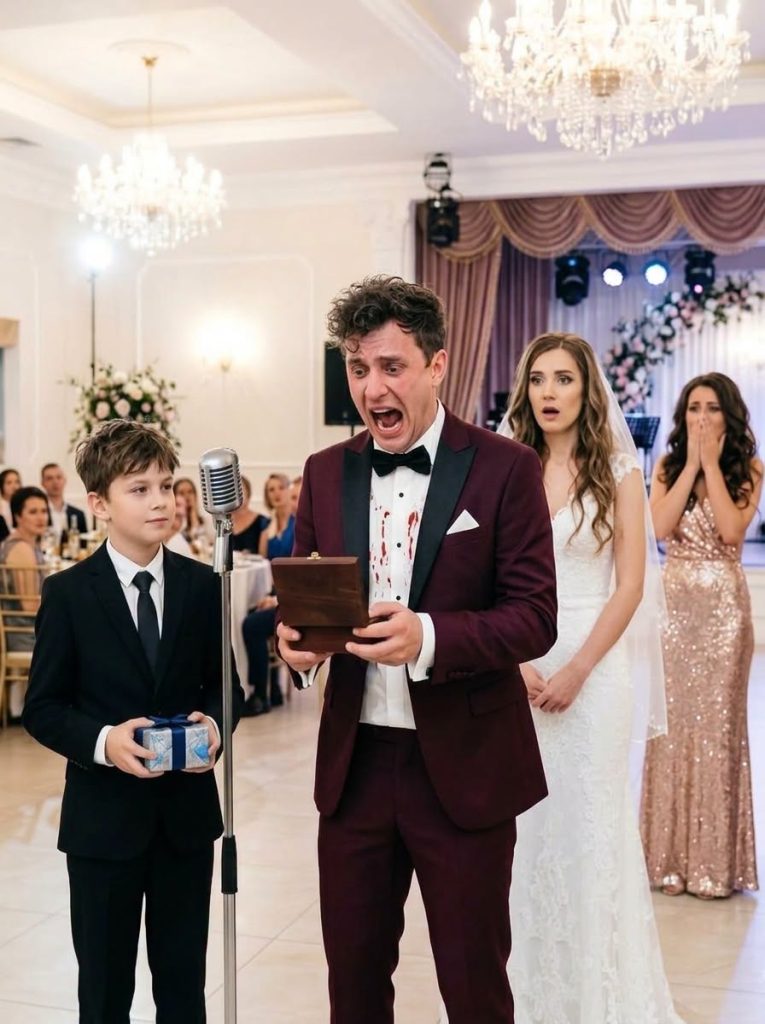
Ethan opened the box expecting something he could hold up for the guests.
Instead, he found a silver watch.
His smile disappeared.
“No,” he said, suddenly loud enough for the nearest tables to hear.
Our son stood beside him, holding the microphone with both hands.
“Grandpa gave it to you when I was born,” Noah said. “You left it in my room when you moved out.”
I was already walking toward them.
Until that moment, I hadn’t known what was inside the little package my ten-year-old had carried all evening.
## The Invitation
The invitation arrived in a thick ivory envelope six months after our divorce.
Ethan and Lila were getting married at a country club outside Dallas.
My first instinct was to throw it away.
Our marriage had ended after I discovered his affair. Since then, he had missed school events, canceled visits, and sent messages about needing time to adjust.
Noah had waited through every excuse.
When he found the invitation on the counter, he studied it carefully.
“Are we invited?”
“Yes.”
“Can we go?”
I asked why.
“I want to see Dad.”
It was such a simple answer that I couldn’t dismiss it.
We discussed what to expect. I told him we could leave whenever he wanted.
I also contacted Ethan to confirm that he genuinely wanted Noah there.
“Of course,” he replied. “He’s my son.”
I wanted to believe that meant something.
## The Box in His Pocket
On the afternoon of the wedding, Noah came downstairs wearing his navy blazer.
He carried a small wrapped box.
“What’s that?”
“A present for Dad.”
“Do you want help carrying it?”
He shook his head and tucked it into his pocket.
I assumed it was something he had made.
Noah liked giving people drawings, carefully folded notes, and little objects he considered important.
I should have asked more.
Later, I would replay that moment many times.
## A Table at the Back
The ceremony was beautiful in the way expensive weddings often are.
White roses lined the aisle. A string quartet played beneath the vaulted ceiling.
Noah watched his father throughout the vows.
At the reception, our table was near the back.
Ethan stopped by briefly.
“Looking sharp, buddy.”
Noah smiled.
“Thanks, Dad.”
Then someone called Ethan away for photographs.
We ate dinner. Noah asked whether there would be cake.
For a while, I thought we might get through the evening without anything painful happening.
Then Ethan took the microphone.
## The Toast
He began with a speech about second chances.
People smiled. Lila leaned against him.
Then he looked toward our table.
“Leaving that mess behind was the best decision of my life,” he said. “Sometimes you have to clear out your mistakes to make room for something better.”
Laughter scattered through the room.
Not everyone laughed.
But enough people did.
I stood immediately.
“We’re leaving,” I whispered.
Noah touched my arm.
“I want to give him his present first.”
“Noah—”
He was already moving.
I followed, expecting to take his hand and guide him toward the exit.
Ethan noticed him and grinned.
“Looks like my son has something to say.”
Before I reached them, he handed Noah the microphone.
## What Grandpa Had Written
The watch had belonged to Ethan’s father.
He gave it to Ethan on the day Noah was born.
On the back, he had engraved a sentence:
**Be the father he can count on.**
Ethan’s father died two years later.
For a long time, Ethan wore that watch every day.
Then it disappeared into drawers, beneath paperwork, and eventually among the belongings he left behind when he moved out.
Noah had found it.
“I thought you might want this today,” he said.
Ethan stared into the box.
Inside the lid, Noah had placed a photograph of the three of them: grandfather, father, and newborn son.
Beneath it was a handwritten note.
**I still want you to be my dad.**
## The Room Went Quiet
There was no scream.
The silence was worse.
Ethan looked from the watch to Noah.
His mouth opened, but nothing came out.
Noah raised the microphone again.
“I don’t think Mom and I are mistakes.”
I reached him then.
“That’s enough, sweetheart.”
He turned toward me, his composure finally slipping.
“I just wanted him to know.”
“I know.”
I took the microphone and placed it on the table.
Then I held his hand.
Ethan stood.
“Noah, wait.”
Our son looked back.
“You said you’d come to my school play.”
Ethan lowered his eyes.
“I know.”
“And you didn’t.”
“I’m sorry.”
Noah leaned against me.
I didn’t ask him to accept the apology.
We walked out.
## In the Car
Once we were away from the ballroom, Noah began crying.
Not dramatically.
Just the exhausted crying of a child who had tried too hard to stay composed.
I sat beside him in the back seat until he could breathe comfortably.
“You didn’t need to do that for me,” I said.
“I wasn’t doing it for you.”
His answer hurt because I understood it.
He had been trying to reach his father.
I held him closer.
“You deserved a better evening.”
“Do you think he’s mad?”
“Whatever Dad feels is his responsibility. You don’t have to fix it.”
On the way home, we stopped for ice cream.
Noah chose chocolate and barely ate it.
I didn’t pretend dessert could repair what had happened.
I simply stayed beside him.
## What Happened Afterward
Messages arrived that night.
Some relatives apologized for laughing. Others said they hadn’t understood who Ethan meant.
I answered very few.
Ethan called repeatedly.
The following morning, I told him we needed to discuss Noah’s well-being before arranging another visit.
I also contacted Noah’s counselor.
I wanted him to have somewhere to speak without worrying about protecting either parent.
Ethan asked whether he could apologize in person.
Eventually, with a plan agreed in advance, he did.
He told Noah that his words had been cruel and wrong.
He didn’t blame the drinks.
He didn’t say Noah had misunderstood.
It was a necessary beginning.
It wasn’t proof that everything had changed.
## The Watch
Over the following months, I watched what Ethan did.
Whether he arrived.
Whether he followed through.
Whether Noah returned from visits feeling secure.
Some promises were kept. Others still required difficult conversations.
I stopped treating an apology as a guarantee.
One afternoon, Noah mentioned the watch.
“Dad was wearing it.”
“How did that make you feel?”
He considered the question.
“Good. But I hope he remembers without looking at it.”
I nodded.
“So do I.”
Then he asked me to help with his homework.
I pulled a chair beside his.
For that evening, he didn’t have to wonder whether someone would stay.