# My Husband Called My Burns an Accident—Then the Doctor Asked About the Kitchen Camera
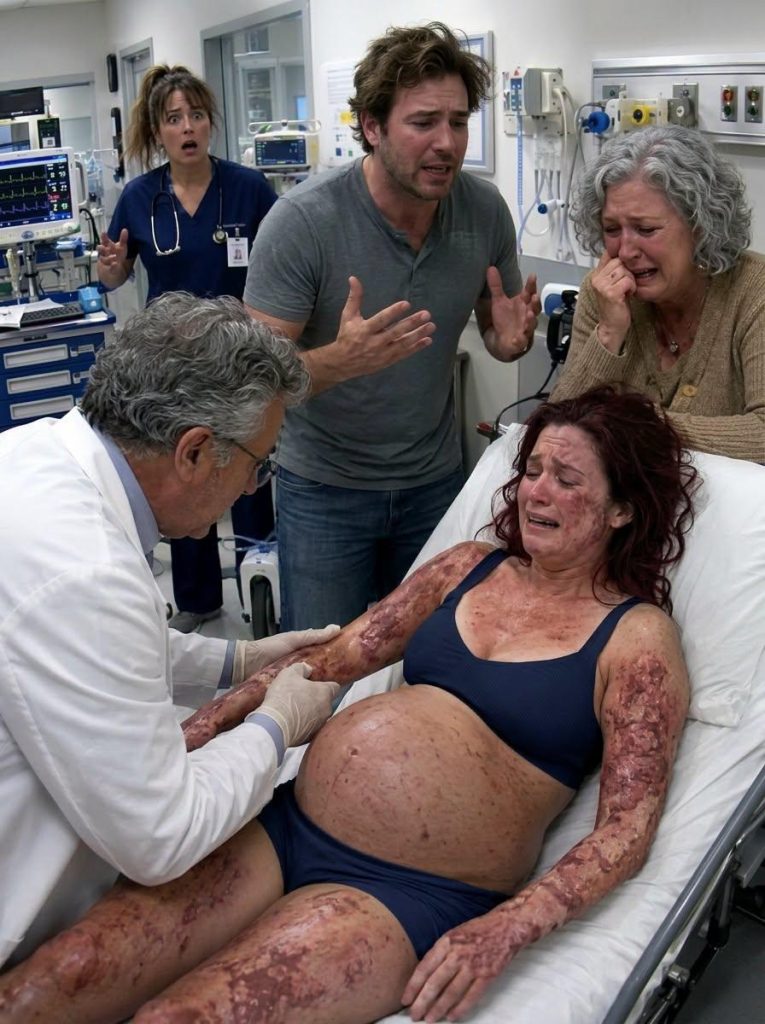
When I opened my eyes, I heard Daniel explaining what had happened.
“She’s always been clumsy,” he said. “She spilled soup and fell.”
His voice sounded gentle, concerned, perfectly controlled.
I knew that voice.
He used it whenever he wanted someone to trust him.
Beside him, his mother began crying.
“We told her she was too tired to cook.”
I lay beneath the hospital blanket, unable to move without pain.
There had been no soup.
Vivian had lifted a pot of hot oil and poured it over my back because dinner wasn’t ready.
Daniel had looked down at me, then at his shoes.
Now they were telling the story they expected everyone to believe.
## The Question Behind the Curtain
The doctor came to my bedside.
Dr. Lena Ortiz and I had known each other in college, though we hadn’t spoken regularly for years.
Recognition flickered across her face.
Then she focused on my care.
She asked Daniel and Vivian to wait outside so she could examine me and speak privately.
Daniel resisted.
“My wife gets confused when she’s upset.”
“I need to hear from her directly.”
Once they were gone, Lena moved close enough that I didn’t have to raise my voice.
“Can you tell me what happened?”
I swallowed.
“My mother-in-law poured oil on me.”
Lena didn’t interrupt.
“My husband watched. He’s lying.”
She asked whether I felt safe with them nearby.
“No.”
For three years, I had softened that answer with excuses.
That afternoon, I finally gave it without one.
## Before I Became His Wife
Before marrying Daniel, I worked as an attorney handling complex financial fraud.
I understood records, transactions, and the distance between what someone claimed and what documents proved.
Yet at home, I had spent years doubting my own judgment.
Daniel encouraged me to leave my firm, saying we could afford it and that I deserved a rest.
Then he criticized my friends.
He questioned my spending.
He told people I was struggling emotionally.
When Vivian moved in, supposedly for a few weeks, she began deciding how our home should run.
If I objected, Daniel said I was being unkind to his mother.
Eventually, I stopped objecting aloud.
They mistook that silence for agreement.
In reality, I had begun seeking help.
## The Records Outside the House
Months earlier, I contacted a former colleague, Caroline Wells.
At first, I described financial concerns.
Daniel was moving money through accounts I couldn’t reconcile. He pressured me to sign documents and became angry whenever I asked for copies.
Caroline listened.
Then she asked about my safety.
Together with independent legal advice, I began preserving relevant records somewhere Daniel couldn’t reach.
Messages.
Financial statements.
Photographs of damaged belongings.
Written accounts of incidents I had previously dismissed.
I also reviewed the trust established by my late father.
Our home belonged to that trust. Daniel’s assertions that he had taken ownership didn’t match the actual documents.
I hadn’t secretly rewritten legal papers or built an automatic punishment system.
I had obtained advice, secured the originals, and stopped accepting his explanations without verification.
## The Camera
The kitchen camera was part of the household security system.
Daniel knew it existed.
He simply believed he controlled the recordings.
After discovering that he had deleted footage before, I arranged separate preservation of recordings I was authorized to access.
Caroline knew where those copies were stored.
At the hospital, I asked Lena to help me contact her.
I could barely hold the phone.
“Caroline,” I whispered. “It happened.”
She asked where I was.
Then she told me to concentrate on my treatment.
“I’ll preserve the records. Tell the officers what happened, and I’ll respond to their requests.”
There was no dramatic countdown.
The evidence didn’t need to become a spectacle.
It needed to remain intact.
## Their Story Began to Unravel
Police officers arrived and spoke with me separately.
I described the assault.
I told them about the camera and Caroline.
They explained what they needed and how the relevant material could be provided.
Outside my room, Daniel continued insisting it had been an accident.
When he learned there was preserved footage, his explanation changed.
Vivian had been holding the pot.
There had been an argument.
Perhaps she had lost her balance.
Each version moved farther from the soup he had first described.
I didn’t hear all of it firsthand.
Later, when I reviewed my own statement with counsel, I understood why keeping my account clear mattered more than listening to his.
The investigation would determine what followed.
My immediate job was to survive.
## Recovery Wasn’t a Victory Scene
I was transferred for specialist treatment.
The days that followed were painful and disorienting.
There were procedures, dressings, medications, and conversations I couldn’t always absorb.
A social worker helped coordinate support.
Caroline handled communications with the appropriate professionals.
My sister came and stayed.
Daniel requested a visit.
I declined.
Vivian sent a message saying she had never intended for things to “go this far.”
I asked my sister to save it and stop reading.
Even an admission could feel like another intrusion when I was exhausted.
I wanted quiet.
I wanted sleep.
I wanted my body to stop hurting.
## The House He Claimed Was His
While I recovered, my legal team reviewed the trust, household finances, and the documents Daniel had pressured me to sign.
His claims of ownership did not make him the owner.
But removing him from the home still required the proper process.
We followed it.
We also addressed separation, financial protections, and access to my accounts.
I changed my personal passwords and authorized contacts.
I did not destroy his belongings or announce that he would lose everything overnight.
I wanted decisions that would stand after the shock had passed.
Eventually, he and Vivian left the house.
By then, I no longer wanted to return immediately.
Safety wasn’t simply having the keys again.
## What I Took Back
The criminal proceedings and divorce took time.
I gave statements, attended appointments, and answered questions I wished nobody had ever needed to ask.
My scars changed as they healed.
Some days, I avoided mirrors.
Other days, I looked carefully, trying to become familiar with a body that had endured something I still struggled to name.
I resumed professional work gradually.
Not because being an attorney made me immune to abuse, or because I needed to prove I was formidable.
Work reminded me that I could think clearly, contribute, and make decisions.
One morning, Caroline brought a file to my temporary apartment.
We discussed it over coffee.
Halfway through, I realized I hadn’t thought about Daniel for nearly an hour.
I paused.
“Everything okay?” she asked.
“Yes.”
I looked down at the notes I had made.
For years, my life had narrowed around managing his moods.
Now there was room for something else.
I picked up my pen and returned to the conversation.