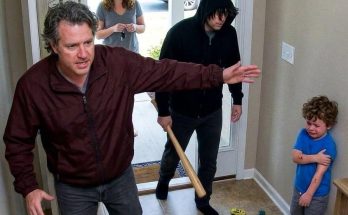
# My Husband Hurt Our Son Over a Broken Toy—His Mother’s Response Made Me Call the Police
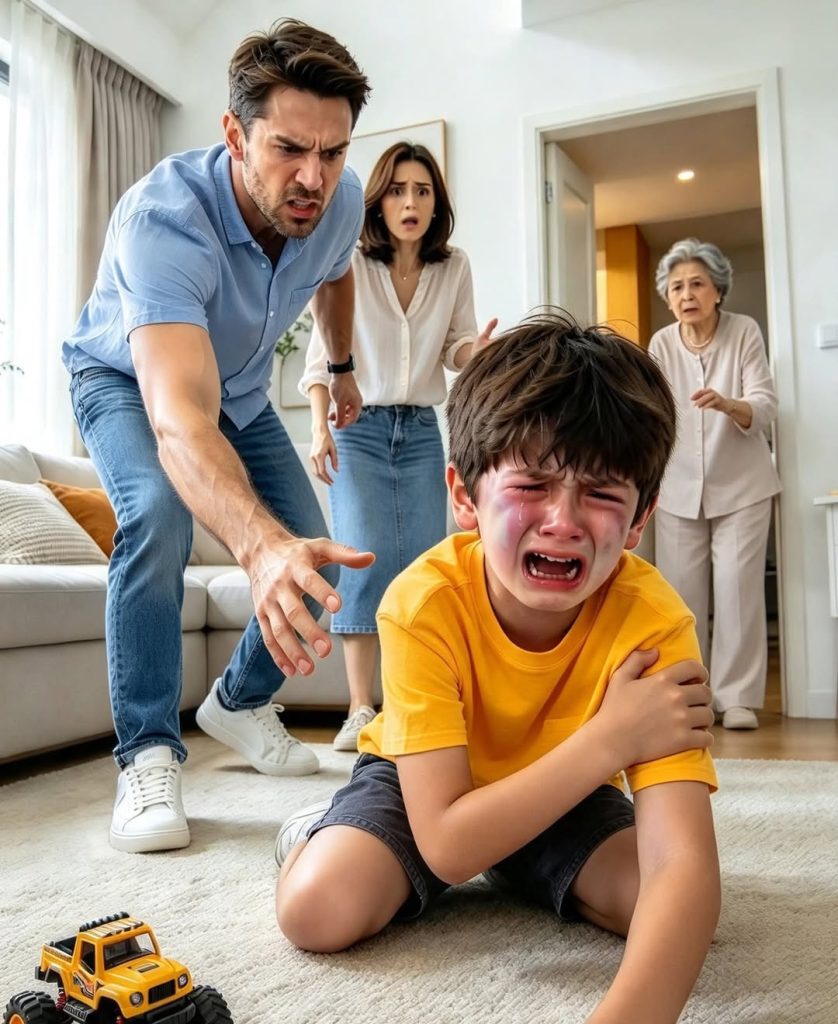
The plastic piece landed on the rug with a sound so small I barely noticed it.
Then my husband grabbed our seven-year-old son.
Oliver had been admiring the model car on the coffee table. He knew he wasn’t supposed to touch it, but curiosity had won.
“Dad, I’m sorry,” he said.
Nathan seized his arm.
Everything happened quickly: the movement, Oliver’s cry, the sudden sound that made my stomach turn.
I screamed his name.
My mother-in-law appeared in the doorway carrying a bottle of liniment.
For one second, I thought she had come to help.
Then she held it toward Nathan.
“Twist it harder so he learns not to touch what isn’t his.”
I stared at her.
There would be no explaining this away afterward.
## Getting Between Them
“Let him go.”
Nathan turned toward me, still holding Oliver.
“He needs to learn respect.”
“Let him go now.”
My phone was on the coffee table beside Nathan’s open laptop. I picked it up and called emergency services.
Nathan’s expression changed.
“What are you doing?”
I gave the dispatcher our address.
“My husband has injured our child. We need police and an ambulance.”
His mother stepped toward me.
“Hang up. This is a family matter.”
I moved between her and Oliver.
Nathan released him.
Our son stumbled against me, holding his arm close to his body.
I didn’t try to straighten it.
I kept him beside me and followed the dispatcher’s instructions.
“Can you move somewhere safer?” she asked.
“Yes.”
Nathan reached toward the phone.
I stepped back.
“They have our address.”
## The Door I Could Open
I guided Oliver toward the front door.
Nathan followed, arguing that I was overreacting.
His mother insisted children cried over everything.
I kept walking.
Our smart lock opened with my code. I had changed my personal access settings weeks earlier after discovering Nathan was monitoring my movements through the household system.
That evening, I needed the door to open—not to trap anyone inside.
Outside, our neighbor, Mrs. Ellis, stood on her porch.
She had heard the shouting.
“Please help us,” I said.
She came down the steps immediately.
Nathan stopped at our doorway.
“You bring him back here.”
Mrs. Ellis led us into her house.
Her husband stayed near the entrance while I remained on the phone.
Oliver pressed his face into my shoulder.
“Am I in trouble?”
“No, sweetheart.”
“But I broke it.”
“That doesn’t make it okay for anyone to hurt you.”
## The Evidence I Had Already Saved
Nathan’s laptop had been open to our household dashboard.
Financial accounts, device controls, camera settings.
Once, I had believed all those systems made our home safer.
Later, I understood how easily he used them to monitor me.
He checked when I left. He questioned unfamiliar stops. He wanted explanations for purchases before I had even unpacked the bags.
Months earlier, I had begun documenting what happened at home.
Photographs of damaged belongings.
Messages threatening me.
Dates and descriptions of incidents involving Oliver.
I saved copies somewhere Nathan could not access.
There was no secret command that would transfer our money, summon federal agents, or end the danger instantly.
There was a phone call.
There were records.
And there was a frightened child who needed medical care before anything else.
## When Help Arrived
Police officers reached the house while paramedics examined Oliver.
I answered questions beside him.
Across the street, Nathan stood in our driveway, gesturing toward the broken model as though its value explained what he had done.
His mother spoke over him.
The officers separated them and began taking accounts.
Mrs. Ellis described what she had heard and what she saw when we came outside.
I told an officer about the household cameras.
He asked me not to alter anything and explained how investigators could request and preserve relevant material.
Then I went with Oliver to the hospital.
I didn’t stay to watch what happened to Nathan.
My son had stopped crying, but his silence frightened me more than his tears.
## The Hospital
The clinical team examined Oliver and took imaging.
His arm was injured and needed treatment.
While they worked, I held his uninjured hand.
He watched every adult who approached.
“Will it hurt?”
“They’ll explain what they’re doing,” I said. “And you can tell them if something hurts.”
A nurse spoke gently to him before asking me to step aside for a private conversation.
She asked whether we could safely return home.
“No.”
Saying it clearly felt strange.
For years, I had added qualifications.
Usually.
Sometimes.
Only when he was angry.
That night, I gave no qualification.
The hospital team helped connect us with support, and the appropriate child-protection process began.
My sister arrived with clothes and a charger.
When she saw Oliver, she knelt beside him.
“You’re coming home with me tonight.”
## His Mother’s Explanation
The next morning, my mother-in-law left a voicemail.
“Nathan was correcting him. You’ve destroyed this family over a misunderstanding.”
I saved the message.
Then I sent it to the professional helping me organize our records.
I didn’t call her back.
Her words in the living room had removed any doubt about whether she could be trusted to protect Oliver.
Nathan’s messages alternated between apologies and accusations.
He said he had lost his temper.
Then he said I had provoked him by interfering.
I preserved those, too.
With legal advice, I sought protective arrangements and began addressing custody, housing, and finances through the proper channels.
None of it happened with a single keystroke.
It took appointments, forms, repeated explanations, and people willing to listen.
## What Oliver Remembered
For weeks, Oliver apologized whenever something went wrong.
Spilled juice.
A dropped pencil.
A toy left in the hallway.
Each time, I answered calmly.
“We can clean that up.”
“You’re not in trouble.”
“Accidents happen.”
We arranged counseling, and I followed the guidance we received.
I wanted to tell him he would never be frightened again.
Instead, I made promises I could keep.
I would listen.
I would ask for help.
I would take him seriously.
One afternoon, he knocked a cup from my sister’s kitchen table.
It shattered.
He froze.
I stepped carefully around the pieces and brought him away from the mess.
“Let’s get your shoes on while I clean it.”
He looked at me for a long moment.
Then he nodded.
## A Different Home
Months later, we moved into a small apartment.
There were no cameras watching the kitchen, no collection Oliver was afraid to walk past, and no grandmother arriving to defend cruelty.
On our first evening, he unpacked a box of toy cars.
“Can these go in the living room?”
“Yes.”
He arranged them along the windowsill.
Then he brought me one.
“Want to play?”
I sat beside him on the floor.
For once, when something small fell and broke, nobody in our home had to be afraid of what came next.