Lady’s Pregnancy Update: A Small Change Leads to an Important Vet Check
Lady still had months to go before welcoming her foal when something caught Katie’s attention.
After coming in from the pasture at Running Springs, the pregnant mare had noticeable swelling beneath her belly. Her udder also looked more developed than Katie expected at this stage of pregnancy. Lady wasn’t acting unwell, but those changes were enough to prompt a closer look.
At approximately 164 days pregnant in the recorded update, Lady had a long stretch of growing ahead of her. Katie wanted to understand what was happening and give both mare and foal the care they needed.
The veterinarian came to examine her, turning an unexpected concern into a plan for the weeks ahead.
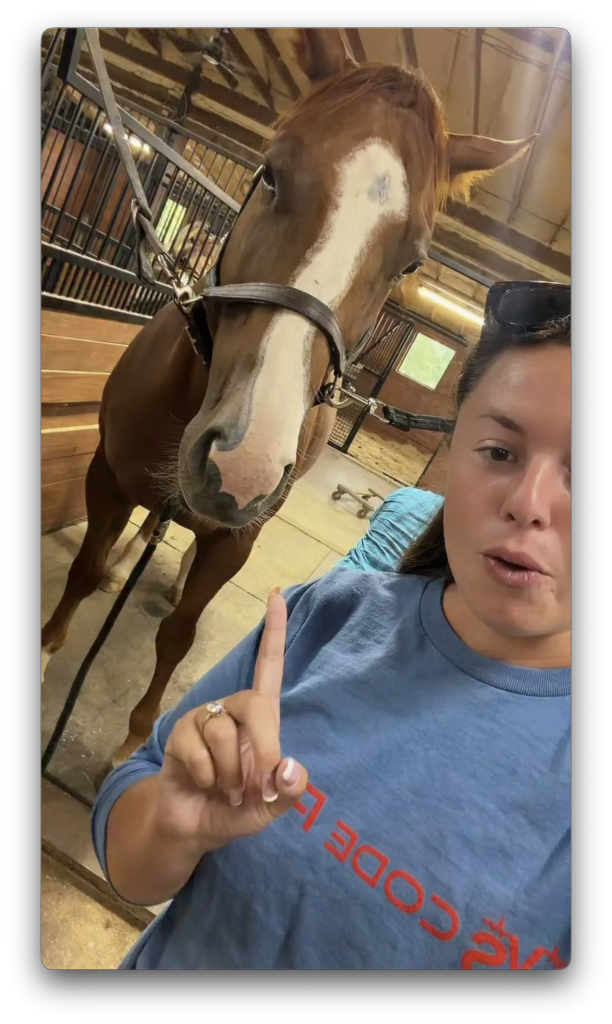
What made Katie concerned?
Katie pointed out the swelling, known as edema, along Lady’s underside. One side appeared noticeably larger than the other. Along with that swelling, Lady seemed to be “bagging up,” the familiar horse-owner term for developing an udder before foaling.
For Lady, a maiden mare expecting her first foal, Katie felt that development was happening far too early.
One concern was possible placentitis—inflammation of the placenta, often associated with infection. Premature udder development can be a warning sign, and veterinarians may use ultrasound to investigate changes in the tissues supporting the pregnancy. Placentitis can threaten a pregnancy, potentially causing pregnancy loss, premature delivery, or a compromised newborn. Merck Veterinary Manual
Those possibilities explain why Katie took the changes seriously. They were risks to investigate, rather than outcomes that had happened to Lady.
For anyone following a much-loved mare’s pregnancy, this is the difficult part of an update like this: something looks different, but the reason is not immediately clear.
Getting the veterinarian involved was the next step toward understanding it.
What the ultrasound showed
Katie explained that, over the past couple of years, she had begun using ultrasound checks to assess her pregnant mares more closely.
During Lady’s examination, the veterinarian measured the combined thickness of the uterus and placenta, often shortened to CTUP.
Some of the areas examined looked normal. Others appeared thicker or more irregular than expected.
Katie was careful in describing those findings. The examination did not present the obvious, severe picture of placentitis she had worried about, but there were enough irregularities to warrant attention.
That distinction matters. The update describes concern about a possible problem and a decision to treat cautiously. It does not establish a definitive diagnosis of severe placentitis.
Lady’s ultrasound findings were considered alongside the visible swelling, early udder development, and her recent medical history. Together, they gave the veterinarian and Katie reasons to take a cautious approach while there was still uncertainty.
Could her recent cellulitis be involved?
A few weeks before this pregnancy check, Lady had dealt with cellulitis.
Katie explained that inflammation associated with that recent episode might help account for the edema they were seeing. It was another possible explanation to consider, rather than a confirmed answer.
The team had been keeping Lady’s affected leg clean, and Katie noted that it still appeared slightly swollen.
That history made the examination more complicated. There was a recent health issue that could be relevant, alongside pregnancy-related changes that deserved their own attention.
Katie also said mastitis had been considered and largely ruled out during the assessment.
The aim was to understand the whole picture before deciding how best to support Lady.
Another question for the veterinarian
Katie asked whether Lady needed a Caslick’s procedure, which can help reduce external contamination of the reproductive tract in selected mares. The procedure may be considered when a mare’s anatomy leaves her more vulnerable to contamination. Merck Veterinary Manual
After assessing Lady, the veterinarian did not think it was necessary. According to Katie, he was pleased with her anatomy.
For followers trying to make sense of the appointment, this was another useful detail: the veterinarian was evaluating Lady as an individual and choosing the steps that suited her situation.
The reassuring signs in Lady’s update
Alongside the concerns, Katie shared several encouraging observations.
Lady’s temperature was normal. She was not lame. She had not been acting noticeably different from her usual self.
The swelling had prompted the appointment, rather than a dramatic change in her behavior.
Those details offered some reassurance while the team worked through the less certain findings. They also showed the value of knowing an animal’s normal appearance well enough to notice when something changes.
Lady could not explain whether anything felt different. Her care depended on the people around her noticing, asking questions, and following through.
In this case, they did.
The treatment plan moving forward
Because of the irregular ultrasound measurements and the physical changes, Katie said Lady would receive antibiotics and an anti-inflammatory medication under veterinary guidance.
Her explanation was straightforward: they wanted to be “safer than sorry.”
The hope was to address a possible developing problem and support Lady through the remaining months of her pregnancy. Katie mentioned an anticipated due date of March 17, making it clear that this baby still needed plenty of time.
No specific medication schedule or follow-up examination date was provided in the update. Katie did say the farm was approaching the stage when the pregnant mares would be checked more frequently.
For Lady, the immediate focus was treatment, attentive care, and watching how she progressed.
A hopeful wait for Lady and her foal
Katie sounded optimistic about Lady, even while explaining why the examination had been necessary.
There was no final answer about how the rest of the pregnancy would unfold. At the close of the update, Lady had been examined, the concerns had been assessed, and a treatment plan was in place.
For those waiting to meet her foal, that is the most meaningful news available.
The excitement of a new baby often begins months before birth. So does the work of caring for the mare carrying it: noticing swelling, keeping a leg clean, arranging an examination, and making decisions with the veterinarian.
Lady’s story is still unfolding. For now, the hope is simple—that she remains comfortable, responds well to care, and has the months she needs before welcoming her baby.